
Alan Hollinghurst: Our Evenings
A review of Alan Hollinghurst's new novel Our Evenings: A Novel

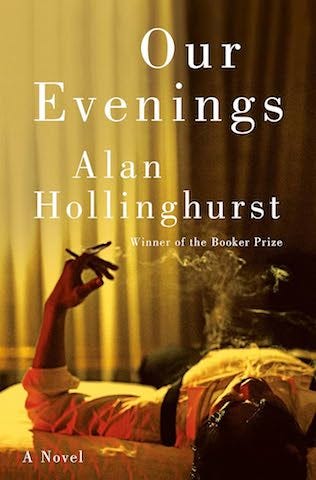
David Win is the son of an English mother and a Burmese father whom he has never seen. He lives with his Mum, a dressmaker and general seamstress, in a small market town in Berkshire, west of London. Alan Hollinghurst follows David’s life from 1962, when he is fourteen and receives a scholarship to an exclusive prep school (public school), up until 2020, at the beginning of COVID. David manages to shape a steady career as a stage and television actor, despite the fact that as half-Asian, he is frequently offered only small, stereotypical parts. Through England's healthy experimental theater scene, he will be able to find more significant roles in new versions of Shakespeare, Jonson, and others. At his public school in 1962 he meets Giles Hadlow, the son of the wealthy philanthropist and patron of the arts who has granted David his scholarship. Giles turns out to be a bully whose aggression transforms easily into sadism. More importantly, we are informed early on that Giles will become a Tory leader very strongly behind the UK’s Brexit decision.
That Brexit vote, which will not occur until 2016, will thus, through the person of Giles, hang over the novel. At stake is the matter of what ultimately is the nature of English identity. Does it have a special insular character that needs to be protected against intrusions by various threats of otherness, whether continental or racial? David, as a gay half-Asian in small-town England in the 1960s, can offer a special vantage point on such issues. On one occasion, when he is hitchhiking as a teenager, a driver stops his car and, instead of offering a ride, berates him and tells him angrily to leave the county. Some townspeople refuse to speak to his mother, a single woman with a colored son. Later in the 1970s, a fellow actor who is of African descent is taken by a famous actress to be a servant who is present only to take her coat, and when David travels with this black actor to a seaside resort, they are rudely rejected by the owner of a B&B.
With Giles as a bully and fanatical Brexiteer and with the casual racism just described, one may appear to have the ingredients for a novel rather different from those Hollinghurst is known for. That is, a framework seems to be set in place that allows for a certain moral sermonizing, a style that seems counter to Hollinghurst’s practice, in the past, of making Henry James his model. That Jamesian practice, in The Line of Beauty for example, does allow for moral assessment, but only implicitly, through thick, close-in psychological and sociological description rather than through explicitly reflective moral criticism. No characters in The Line of Beauty, including the gay characters central to the novel’s point of view, escape this subtle ethical assessment, but one does not experience the novel as preaching a distinctive moral and political position. In the present case, it is true that Giles Hadlow is treated rather more crudely and simply than The Line of Beauty’s Gerald Fedden, the Tory who brings charm and energy to his scenes, even if he ends up in adultery and financial misdealings. And it seems an advance that through David's eyes, matters of racism can be brought more clearly into view. In Hollinghurst’s previous work, black characters tend to appear merely as sexually desirable, not as having a larger life shaped visibly by racism.
Yet in the end it is Henry James that triumphs here; this does not become a seminar in the morals of race and otherness, even if these topics are never absent. Giles appears only a few times and does not have much weight in the story itself. The narrative point is rather to give Dave Win a full and complex life, described through the immediacy of his subtle impressions as he moves through the world. There is little discussion of any larger ideas at all, moral or otherwise, even in situations, such as Oxford student discussions, when political and aesthetic ideas would naturally be debated.
Hollinghurst is perhaps at his most astute in the way he treats the subject of the special character of Englishness. Once we see the extremely negative way in which Giles the Brexiteer is treated, it may appear that there will ultimately be a clear ethical contrast between the advocates of a closed-off little England, with its special historical, cultural, and landscape traditions, and a cosmopolitan, globalist, Euro-centered nation. The former will be seen as still caught up in racism, xenophobia, and homophobia, while the latter will stand for justice, openness, and equality. But Hollinghurst resists this easy contrast. He does so by making Dave something of an avatar of a cultural Englishness linked firmly to its past. Dave describes his pleasurable walks among the Downs of Berkshire and when he returns at a much later date to his boyhood Foxleigh (fictional), he finds that he misses the shops and the orderly quiet that formerly characterized the small market town. The changes brought about by larger, global economic pressures are not appealing ones. The plays Dave typically acts in reflect not just a traditional English canon but also the established commitment of even small towns in England to the theater. He appears in a great deal of Shakespeare, of course, but also in Jonson, Beaumont, Congreve, Wycherly, and Wilde, and less well-known British plays are mentioned in the text as well, such as Journey’s End and Trelawny of the Wells. The poets mentioned are Gerard Manley Hopkins, Matthew Arnold, and Dryden, while a student house near Oxford is said to be near the dwellings once occupied by the poets Graves, Masefield, and Bridges. Dave's essential Englishness is shown as well in that he starts falling in love with acting when he gains the approval of his schoolmates by doing convincing enactments of Bertie-Wooster-and-Jeeves lines from the Wodehouse stories. Later on, he and his late-in-life lover/husband will enjoy checking out, in an English fashion, old churchyards and their Victorian tombstone dedications. We are also given a traditional English scene, when Dave is at Oxford, of punting on the Isis and Cherwell. As a student, Dave is attracted to the paintings of the English Lawrence Alma-Tadema and the Anglo-Irish Francis Bacon, not to the greater riches of a more European art.
Although a passage in Janáček is the source of the book’s title, it is the very English Vaughan Williams who is the prominent musical reference, someone who is said to capture a specially English feeling. “There was no one else around, an English mood, seductive as sunshine, the church above a gentle valley, hay ready for harvest in the fields below, and last night’s Vaughan Williams still in my system.” There is a similar mood in the following: “Still, for now, the last sunlight, edging upwards across the Vale, lit the woods and hedgerows, ancient churches, cars on sidelights tiny in the far-off lanes, and turning homewards.” In one scene with Oxford students, Mahler on the phonograph is quickly replaced by Cream and Eric Clapton, from the album Disraeli Gears. There are many chances to give Dave a more European and more global set of aesthetic and musical tastes, and he does act in Racine, for example. But in general those opportunities are not exploited.
Hollinghurst’s subtle development of a contrast between a traditional native Englishness and a more cosmopolitan order is perhaps suggested in an appealing scene where, while Dave is at his public school, there is a father-son cricket match before the boys are driven home for vacation. If Dave has a role in Troilus and Cressida, with its noted procession of Trojan heroes, here there is a procession of mostly English cars that Hollinghurst very affectionately names: Wolseley, Riley 1.5, Singer Vogue, Humber Snipe, Austin Cambridge, Morris Minor, Rover, Triumph, MG. We hear later of a Ford Anglia and a Zephyr. This English lineup is supplemented, but definitely not overwhelmed, by a European Daimler, Alfa Romeo, and Lancia Flaminia, and, especially, by a beautiful Citroën DS. As one follows the arrival at the event of so many finely named English cars, one might recall how, in TV shows from the UK today, the cars are likely to be Japanese, Korean, German, or Swedish. Hollinghurst seems to be bringing back, with a real degree of longing and affection, the vivid English past in which a native English engineering competence could engage confidently with the wider foreign world. So he never reduces his novel to a simple, encompassing attack on the sentiments around Brexit. He is as much attached to the little England that is perhaps being lost as he is to a more cosmopolitan idea of culture and of justice.
There is a telling episode on this matter fairly late in the novel. David is asked to participate in a major arts event at the very English arts festival in Aldeburgh, founded by Benjamin Britten and Peter Pears. Few things could be more traditionally English than the piece he is contributing to. He is the speaker in Vaughan Williams’s An Oxford Elegy, which uses spoken words, chorus, and orchestra set around two poems by Matthew Arnold: “The Scholar Gypsy” and “Thyrsis.” Giles Hadlow, the Brexiteer and former schoolmate of Dave, has been named as Arts Minister by the Tory government and he flies in on a helicopter, since he has another event to attend in Brussels. There is a romantic, elegiac section that Dave has prepared to read piano, very softly. Just as he is getting to this section, which mentions fondly the towers of Oxford, a screeching noise emerges and gets louder and louder and soon drowns out the entire performance, causing it to stop. It is Giles’s helicopter taking off from a spot adjacent to the building. Has he actually timed his exit, through his old-time bullying, resentful attitude toward Dave, so as to ruin Dave's performance? Or is he just completely and selfishly careless regarding the survival of the culture of the arts in England? We have, in the end, a nice contrast. It is not between cosmopolitanism and a narrower Englishness but between two attitudes toward the latter. The first one is Dave’s (and presumably Hollinghurst’s): a quiet, faintly melancholy celebration of the beauties of an older Englishness that deserves to last and to be supported, and that is not hostile to foreign influences. (Dave, we learn, has, late in his career, acted in an avant-garde play by a contemporary German feminist.) The second is that of Giles: an extremely loud expression of an insular, xenophobic Englishness, such that the very worthy achievements of an older English culture are not celebrated but are drowned out or destroyed by all the rhetorical, political noise. Brexit (so is the suggestion) is not a preserver of a worthy insular Englishness but a destroyer of it, replacing it with a crude, graceless set of ideological attitudes. It is significant to Hollinghurst’s scheme that Giles’s father, the philanthropist Mark Hadlow, laments from early on that his son has no artistic taste whatsoever.
There is a further expression of Englishness that characterizes Hollinghurst’s novel itself. One will recall the philosophical contrast of the 17th and 18th centuries: between the British empiricism of Locke and Hume and the continental rationalism of Spinoza and Leibniz. In the latter case, the focus is on fully developed ideas and their logical interrelationships, as in Spinoza’s demonstrating of ethics in a geometric order. In the former case, the focus is on sense impressions, on a sensibility that resonates perceptively with happenings in the world. If Kant’s morality highlights the stirring idea of a rational will that can will itself, Hume offers us the mind as something like a tuning fork that vibrates with the mental states of others, so that certain moral sentiments and moral sympathies emerge. Hollinghurst as a writer, one might say, is entirely on the side of Locke and Hume and of this British empiricism. In this first-person novel, we follow Dave's engaging sensibility as he takes in very finely the sensory happenings around him. Whether we are dealing with gatherings of Oxford students or of the members of the experimental theater group, Hollinghurst does not have these individuals discussing political or aesthetic ideas or ideas of any other kind, including arguments for or against Brexit. We are just experiencing the vibrations of the surrounding social world as Dave Win has sensitive impressions of these. We are left to draw idea-conclusions on our own. So Hollinghurst remains, in this sense, a celebrator of a traditional Englishness.
This decision on Hollinghurst’s part allows him to display his extraordinary skill at subtle psychological observation and allows him as well to continue his love affair with his great literary hero, James. As with James, it is often the shimmering suggestiveness of a social gathering or an individual counter that he is skilled at picking out and describing with graceful precision. We may notice this feature especially when it comes to the topic that Hollinghurst is most well-known for: homosexuality. In earlier books, quite a few gay individuals seem to have sex rather often and rather easily. Soon after meeting, they are in the bushes or elsewhere engaged in sexual intercourse. Dave is not so assertive, though eventually he will have an erotically successful career. But his character and sensibility, as well as his youth in the early chapters of the novel, offer Hollinghurst the opportunity to be ever more Jamesian. We see Dave, at fourteen, vacationing with his mother and her friend in a north Devon resort town on the Bristol Channel. He is aware of his noticing of other males on the beach and in a public urinal he observes crude signs of possible homosexual activity. (His falling on this outing, without consequence, for a nineteen-year-old Italian waiter from Bari shows the novel’s play between Englishness and foreignness that Dave himself stands for.) Later at school he will be attracted to a master in his mid-30s who offers him a special one-on-one musical training and seems attracted to him as well but who would never do anything improper. We follow Dave's impressionable mental states as he goes to one of these musical training sessions. At Oxford, Dave is strongly attracted to Nick, who, in the late 1960s climate of tolerance and marijuana, allows Dave to sleep chastely in his bed one night, but Nick’s sexual interest is only in women. So in following Dave we can enjoy Hollinghurst’s skill at picking up the subtle vibrations, hints, and attractions between people that never turn into physical intercourse, as often in James.
Later we will see successful sexual affairs with Chris, an older city bureaucrat; with Hector, a fellow actor whose family is from Liberia; and finally, with Richard, whom he meets when he is sixty. In a manner that might be surprising in other Hollinghurst novels, we hear virtually nothing of Dave's sexual career from 1975 or so until 2008. Instead we have a further surprising focus: on the lesbian relationship between his mother and a woman who is at first a dressmaking client. Again, we have a Jamesian sensibility at work as Dave, from fourteen on, picks up hints and half-understood shapes of what is going on there. His mother and Esme will have a successful forty-year relationship and Dave's sensitive readings of the social world around him are activated as much by his reactions to Esme’s death and then to his mother’s death fourteen years later as they are by his own sexual involvements. He learns to appreciate how within their conservative, small-town England, a rather large and vibrant culture of women attracted to women has developed.
I have claimed, as others have, that Hollinghurst may have no writing peer in English today who is so well able to have his characters sense and articulate the subtle, complex mental states of others. The only way to make such a claim persuasive is by offering quotations, and Hollinghurst gives us a generous supply of these, if not so many as in The Line of Beauty. On one sighting of Giles: “He nodded amiably at him now, and gave me a strange long look, a half-surprised hint of a smile in which the suspended friction of our friendship seemed to be reviewed, and assessed for present usefulness.” Regarding one public school master: “He looked at me, in all his mastered ambiguity, the frozen fraction of a smile that might usher in relief at a cleared-up misunderstanding, but might just as well be a sarcasm shaping, or a wigging you were stupid to think you could ever have avoided.” Nick’s easy tolerance may have a negative side: “Sometimes Nick’s absolute unconsciousness of my appearance, my difference, a sort of ethical beauty in him, seemed to verge on a blander disregard for the whole problem.” There is an awkward encounter at a social event: “. . . we chuckled guardedly, unsure if we were enemies, revealed in our true colours, or if in fact we were enjoying the unexpected intimacy of two strangers caught up in a mutual muddle. I saw how he regretted blushing, and yet perhaps the blush was a shortcut, a skipping over pages of preamble to other rosy possibilities.” Again with Giles: “I felt he was caught, like someone starting a beard, in the awkward middle of a transformation into a new impressive self that he had imagined but we hadn't thought of at all.”
Dave does seem to share a net of feelings, of impressions, with his mother. “. . . my heart was thumping at the insult to both of us, and also at my pained attempt to feel the insult as Mum felt it, her own hurt quickly concealed to protect me.” “Our unspoken tactic was to assume that any person thrown by my appearance was puzzled by something else, and to solve that other puzzle for them.” Hearing her at one party with her lesbian friends: “. . . the novel thing was to hear her raised her voice amid the general laughter - I felt a sudden loneliness, alongside pride, and relief.” In that last quote, we experience the complexity of Dave’s reaction: he feels a loss of his longtime special closeness to his mother, a pride in seeing her so much valued by this group, and a relief that she now has a world of her own, that her emotional life is not simply his responsibility.
Hollinghurst grants Dave a keen sense of quickly encapsulating another's particular trait or general character. On one actress’s pronunciation of ‘Burma’ when she meets him: “. . . the hint of a guttural r seemed to colour the country with her own unknown assumptions about it.” He meets, as an adult, a poet who was once a schoolmate: “Alec’s self-belief was perfect, the drudgery of trotting out those same gimmicky similes and shameless last lines was the least he could do for himself, and the chuckles and satisfied sighs of the audience were proof that his magic still worked. In personal style he was rough, a pub man and a shagger, but as a poet he was precious as a Meissen figurine.” Hollinghurst is acute on the sudden awareness of changes in the atmosphere of a room: “. . . the tiny shift of atmosphere when another young person who wasn’t white arrived after me at a party, a quick, often meaningless rebalancing that most of my white friends, I am sure, I had no sense of.” With Nick: “I lay there for agonized hours as the miracle of being in bed with him was nibbled away by the heat and the hangover and the longing.”
Dave's clear devotion and attachment to many features of an older Englishness, while his Burmese origin and gay orientation suggest a successful cultural assimilation of forms of otherness, appear to offer a hopeful model for England. As with the entrance of the beautiful Citroën DS amid the wonderfully named English cars at the cricket match, and as with Dave's ability to accept an avant-garde German leftist play into his mostly English theater repertoire, England, so it appears, can remain confidently and richly itself while it assimilates various kinds of entries from the larger world. Brexit may appear then as a temporary error in a larger positive trend. Dave himself, approaching seventy, professes in interviews his overall optimism about social changes. While his Asian origins have landed him crudely stereotypical roles as an actor, he has also had many more diverse and challenging parts and has managed to make a life for himself in theater and television, so that he is frequently recognized by others and owns a three-bedroom house in northwest London. As someone growing up in an often difficult period for gays, he is now, rather late in life, married to a man he loves. So his social optimism appears justified. But an unexpected incident of violence at the start of the COVID epidemic brings that optimism very much into question.
If you would like to read my thoughts on Alan Hollinghurst’s previous novel The Line of Beauty, consider purchasing my book Recent Gay Novels and the Return to Literary Modernism, available on Amazon in paperback and kindle versions. You can read the chapter on Hollinghurst for free at the link below: